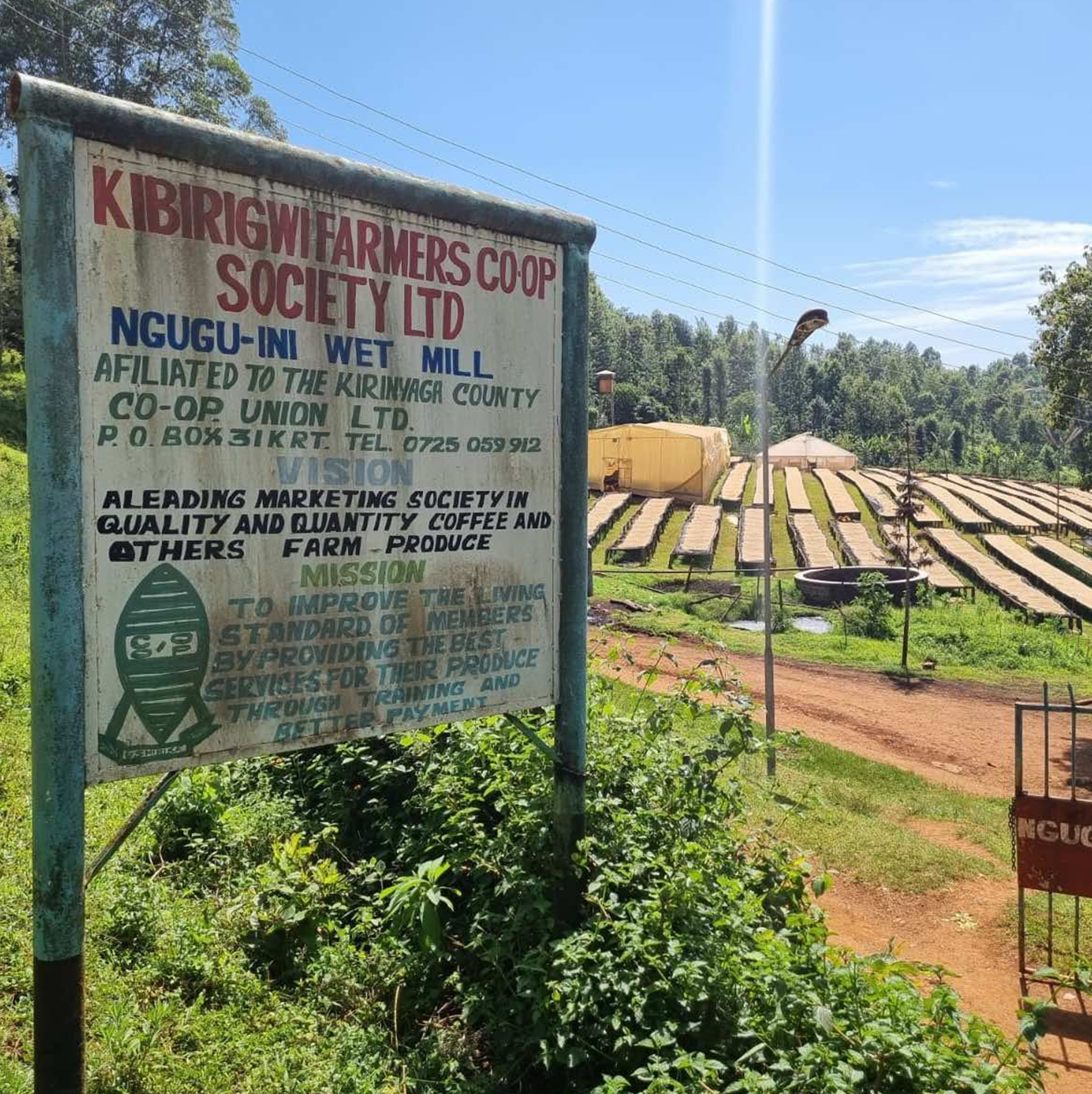


This AA grade lot was produced by members of Kibirigwi Farmers Cooperative Society. Registered in 1958, it is one of Kirinyaga County's longest-established cooperatives and the second largest in the region. Through its network of washing stations (known locally as factories), Kibirigwi supports thousands of smallholder farmers while helping to produce the vibrant, expressive coffees for which Kirinyaga has become renowned. In the cup, we find notes of juicy blackcurrant, tangerine and vanilla.
This lot was processed at Nguguini Factory in Kirinyaga County, central Kenya. Situated on the south-eastern slopes of Mount Kenya, Kirinyaga is widely regarded as one of Kenya's premier coffee-growing regions. Rich volcanic soils, elevations of 1,600–1,800 MASL and a cool climate combine to produce the bright acidity and concentrated fruit character that have become hallmarks of Kenyan coffee.
Nguguini is one of the region's oldest washing stations, having been established in 1958. Around 1,200 smallholder farmers deliver coffee cherries here during the harvest season. Most cultivate coffee on small family plots alongside food crops grown for household consumption.
This lot is made up primarily of SL-28 and SL-34, two of Kenya's most known coffee varieties. Developed and released by Scott Laboratories in the 1930s and 1940s, they are prized for producing coffees with vibrant acidity, pronounced sweetness and complex fruit character. A small proportion of the lot is made up of Ruiru 11, a hybrid that was later developed to improve disease resistance and increase productivity. Unlike the SL varieties, Ruiru 11 can be planted much more densely, making it particularly well suited to Kenya's smallholder farms
Kenya grades all exportable coffee according to bean size, with larger beans generally commanding higher prices (although this is not always the case). This lot is graded AA, the country's largest standard screen size. AA beans pass through a 17 or 18 screen (meaning they are at least 7.2 mm in size).
Farmers hand-pick ripe coffee cherries before delivering them to Nguguini Factory. There, the cherries are sorted to remove underripe, overripe and defective fruit before being depulped and fermented for 16–24 hours.
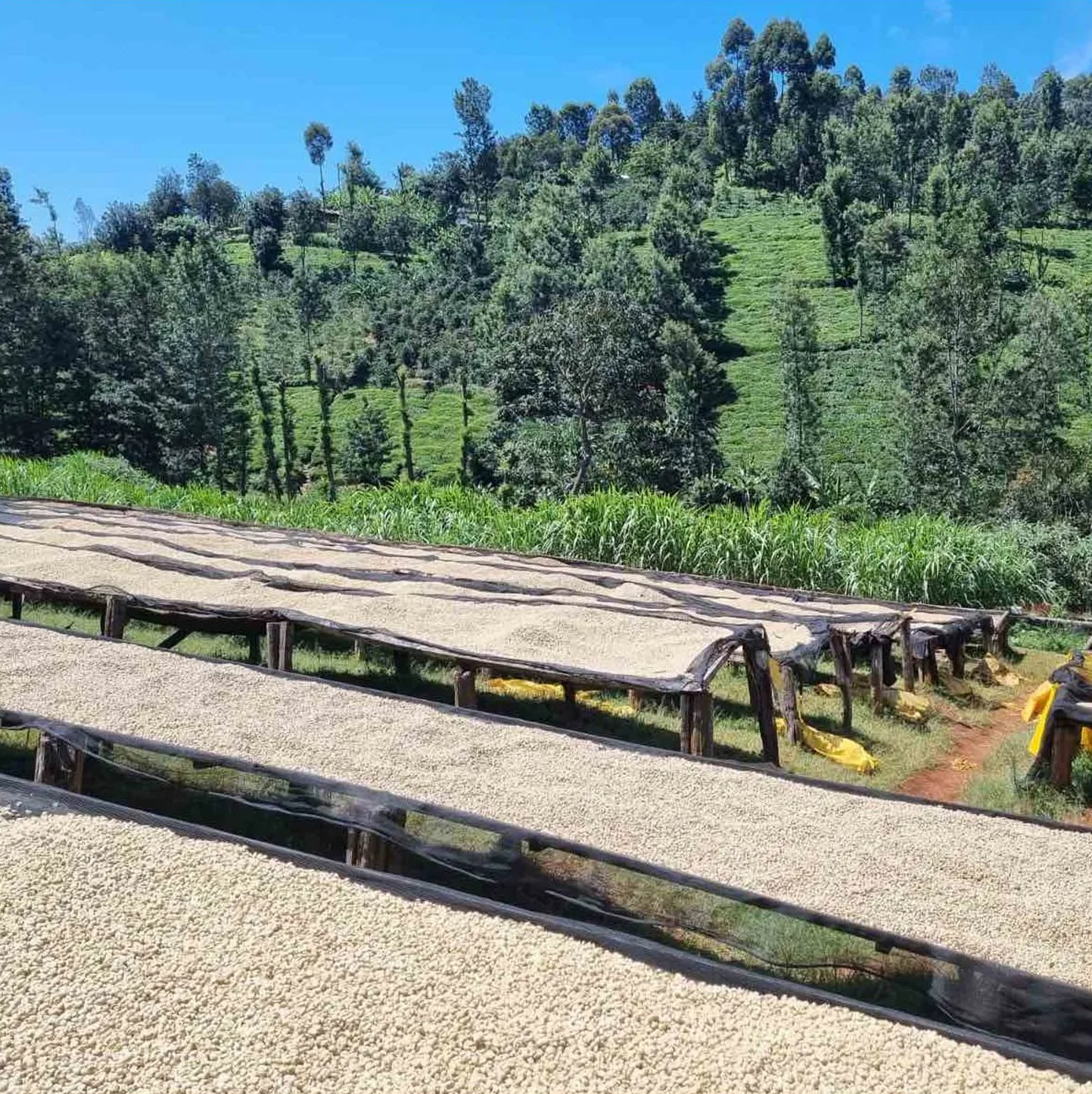
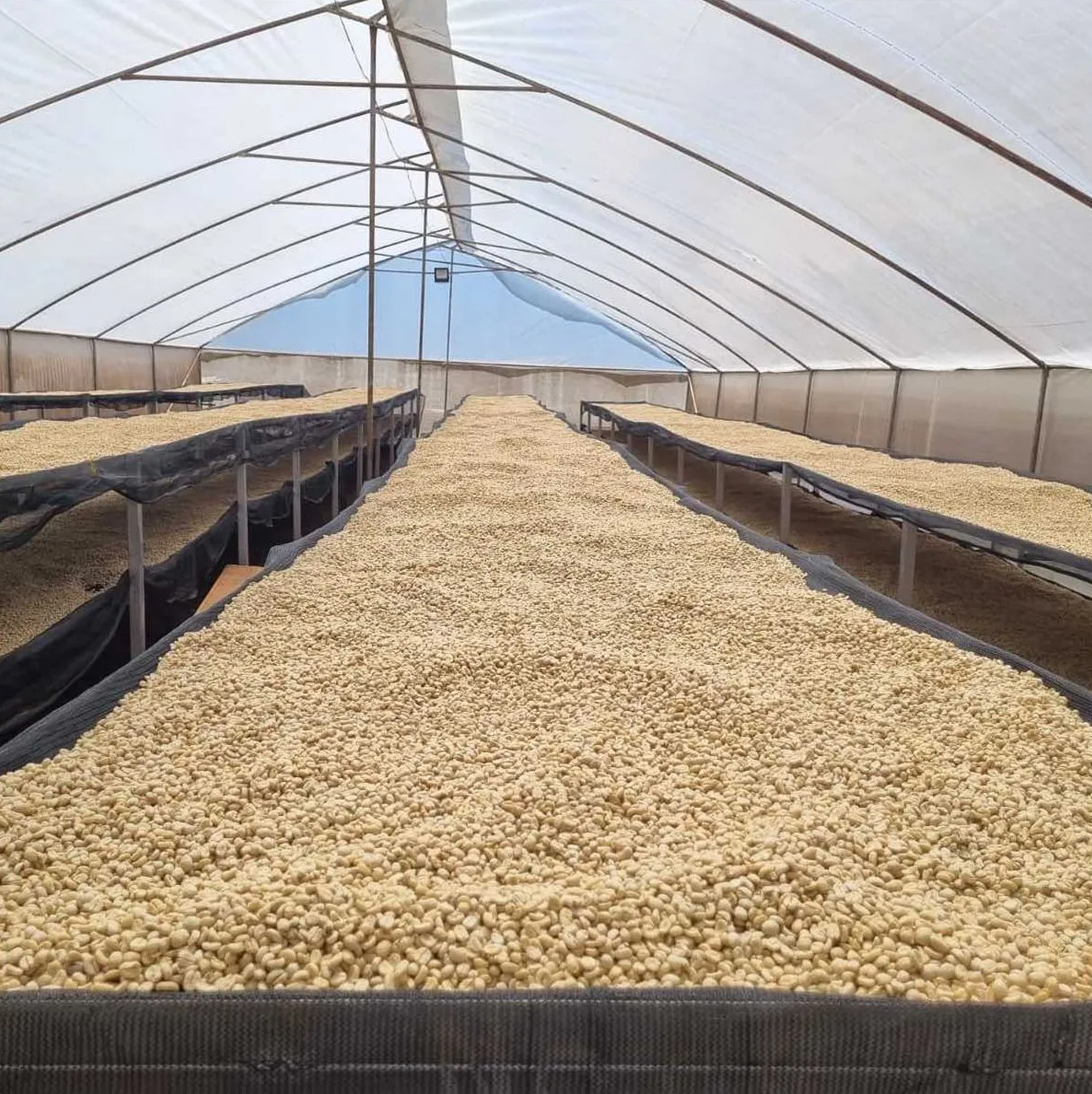
After fermentation, the parchment coffee is washed and graded by density in washing channels, with the densest beans separated from the lighter grades. It is then soaked in clean, circulating water for a further 16–18 hours before being dried on raised beds for one to two weeks, depending on the weather. During drying, the coffee is turned regularly and covered during the hottest part of the day and overnight to ensure an even, consistent drying process.
This coffee landed in the UK in June 2026. We purchased it through Falcon Coffee, who sourced it via Kenya's coffee auction system. During harvest, weekly auctions are held at the Nairobi Coffee Exchange. Before each auction, every coffee lot is graded and samples are distributed by licensed marketing agents to registered exporters, allowing buyers to evaluate the coffees before submitting sealed bids. This transparent auction process encourages competition between buyers while helping producers achieve market prices that reflect quality.
Among the many lots from the auction system that we sampled, this coffee stood out for its classic expression of Kirinyaga: bright, juicy and structured, with the blackcurrant character we love in washed Kenyan coffees, balanced by sweet citrus and a vanilla finish.


If you're not sure which coffee is for you, or you want to try them all, then our discovery pack is just what you need.
Shop now