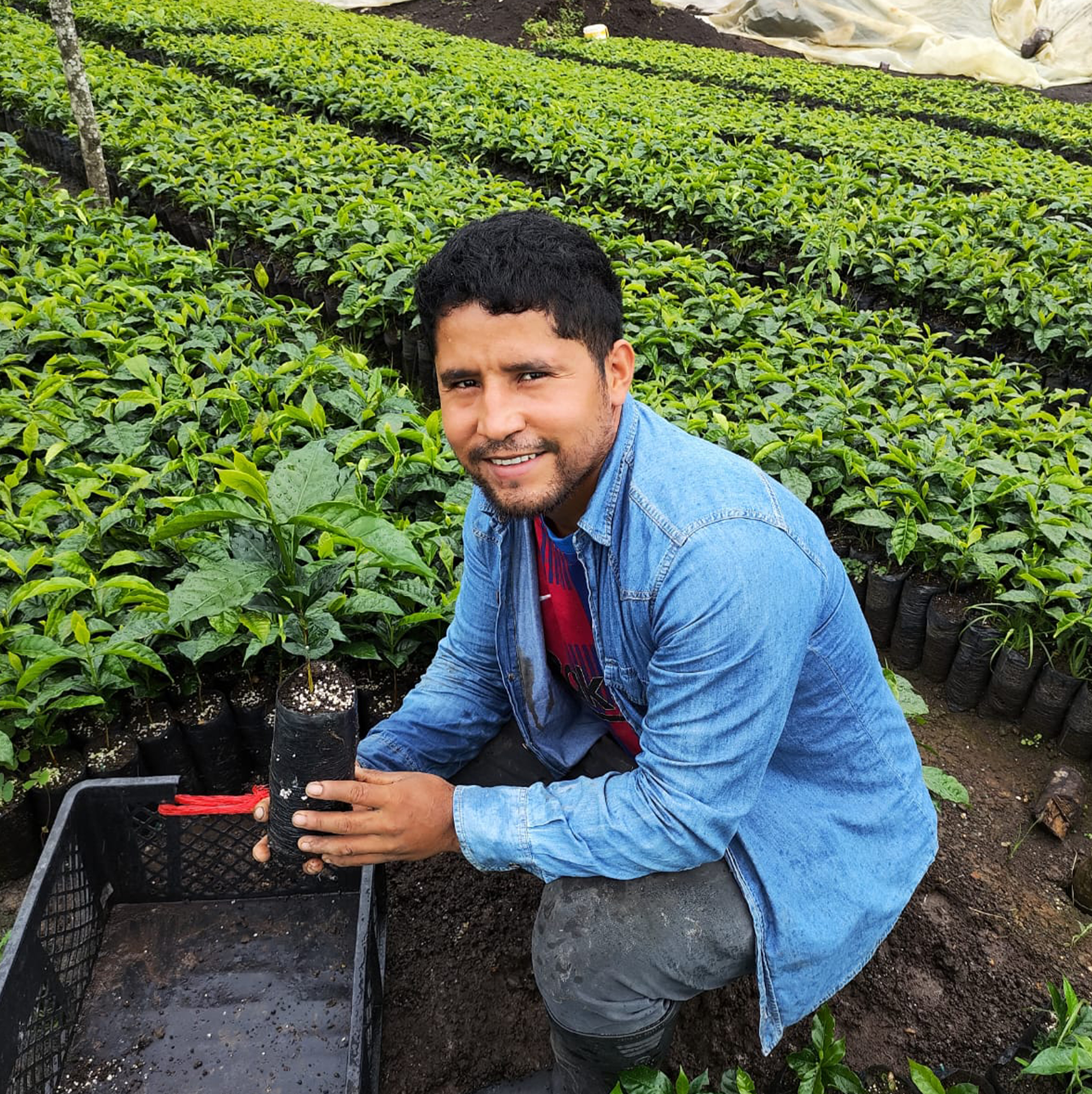
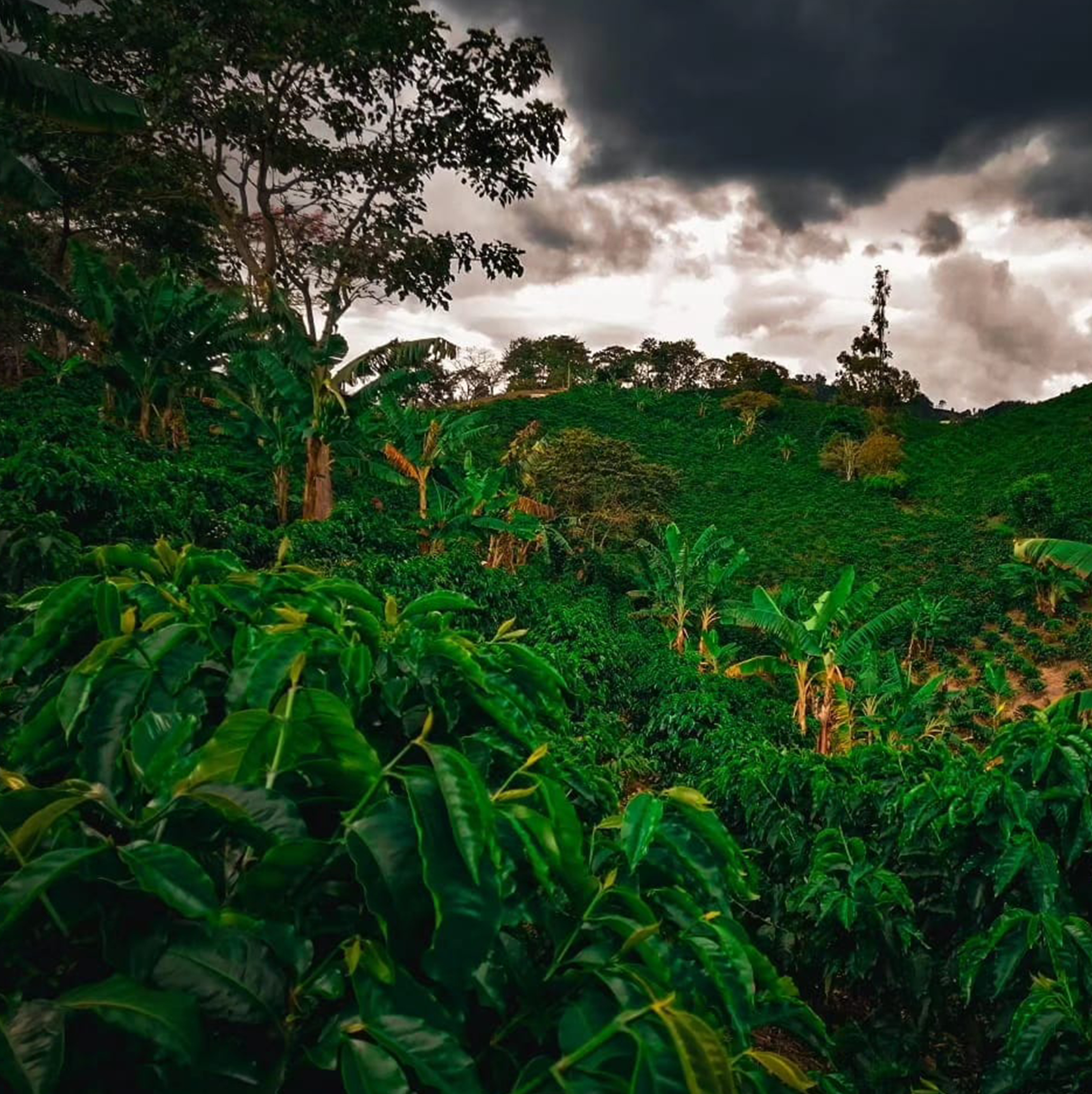


This exceptional lot was produced by Edinson Argote on his farm, Quebraditas. Bourbon Ají — named for its aromatic resemblance to chilli pepper (ají in Spanish) — is a recently identified variety discovered in Colombia and believed to trace back to an Ethiopian landrace. Following a carefully controlled fermentation with wine yeast inoculation, it produces an intensely aromatic and layered cup, with cardamom on the nose, notes of passionfruit and citrus, and a cooling finish reminiscent of a mint julep.
We first met Edinson at the Manchester Coffee Festival in 2024, after being introduced by Jonny Martinez, whose own coffee we had begun roasting earlier that year.
Edinson's journey into coffee began at a buying station in Acevedo, Huila, where he worked alongside his cousin loading and unloading coffee. Fascinated by flavour, he pursued sensory training before working at some of Cauca's most innovative coffee farms. He later became Head of Quality at one of Colombia's most pioneering coffee producers.
Drawing on this experience, Edinson returned home to establish Quebraditas with his family. Today, the farm focuses on cultivating distinctive coffee varieties and exploring innovative, quality-driven processing techniques — an approach clearly reflected in this Bourbon Ají.
This coffee underwent a multi-stage fermentation and drying process that contributes to its distinctive aromatic character and complexity in the cup.
1. Harvesting, floating, oxidisation
Ripe cherries were selectively harvested, with the aim of ensuring that at least 90% of the picked fruit was fully ripe. The cherries were then floated to remove underripe and overripe fruit before undergoing 24 hours of oxidation in a food-grade plastic drum. After this stage, the cherries were pulped to remove the fruit surrounding the seed.
2. Washing, fermentation, yeast inoculation
The coffee was first washed at 25°C before undergoing a 72-hour fermentation at temperatures below 25°C, with wine yeast added to guide the process. Following fermentation, the coffee received a second wash at 5°C, helping to halt microbial activity and lock in the desired flavour profile.
3. Drying
The coffee was dried on raised beds for 15 days until it reached the target moisture content.
We purchased this coffee through Jonny Martinez and his importing company, Mi Café Trading. We first connected with Jonny over Zoom in May 2024 and enjoyed learning about his family's approach to coffee farming, as well as his decision to begin importing Colombian coffees to the UK.
In 2024, we roasted only coffees from Jonny's own farm, Finca El Jaragual. In 2025 and 2026, we began roasting coffees that he had sourced from other Colombian producers alongside his own.
We believe transparency around pricing is an important part of supporting a more equitable specialty coffee supply chain. The cost of moving coffee from farm to roastery can vary significantly depending on origin and supply chain structure. The figures we share reflect this: when we purchase through an importer, we publish the price we paid them; when we work more directly with producers or exporters, we publish both the price paid to the exporter and the total landed cost of the coffee at our roastery.


If you're not sure which coffee is for you, or you want to try them all, then our discovery pack is just what you need.
Shop now


